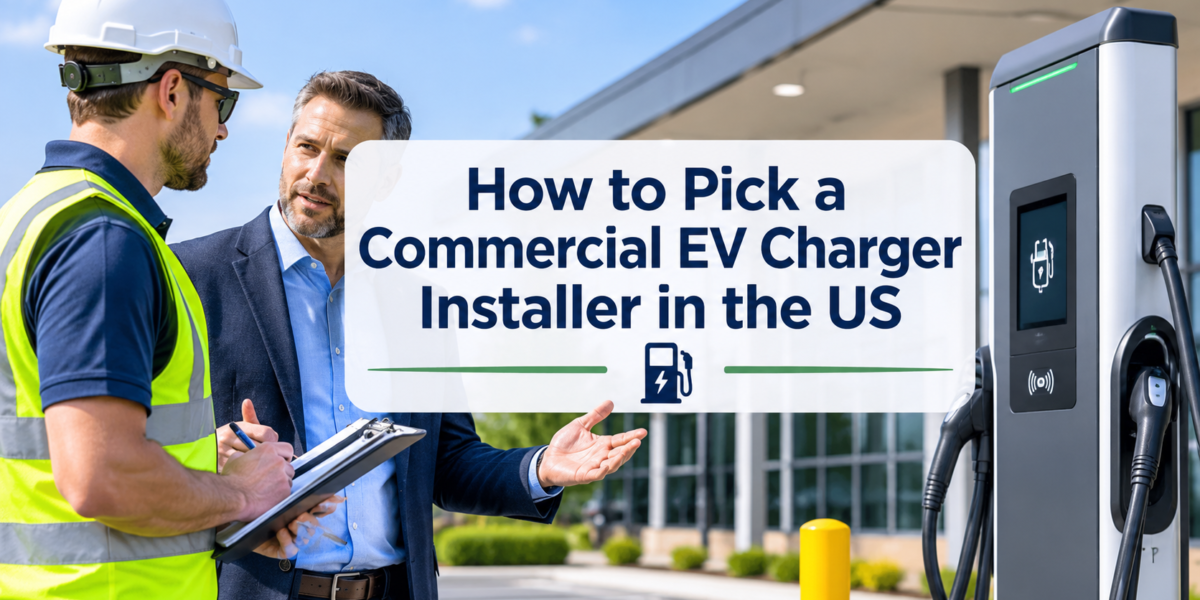
A gas station owner recently asked online whether a charger grant was worth the trouble. The replies split into two groups. Some people had installed chargers and were happy with them. Others had paid for work that never ran properly. In our reading of those threads, the charger hardware was rarely the problem. The trouble usually started with the installer, and with what the owner checked before signing. That is what this guide covers.
We wrote it as a checklist you can use in a meeting with any installer. We did not rank companies, because we could not verify how any installer performs in the field. What we can do is show you the questions that separate a careful contractor from a risky one.
Ask who pulls the permits
A commercial charging project almost always needs electrical permits, and some sites also need zoning or building approval before any equipment goes in. Ask the installer directly who applies for each permit, whether the permit fee is in the quote, and what happens if an inspection fails. A good installer answers these questions quickly and in specific terms. A vague answer, or one that puts the permit on your shoulders, is a warning sign.
Utility steps belong here too, because they often run in parallel with permitting. The guidance in TEP’s business guide on EV charger installation describes how the utility review fits into the overall project, and it is worth reading before your first meeting.
Get the utility timeline in writing
This is the step most owners underestimate. A large charging load can require a service upgrade, a larger transformer, or new conductors from the street. The utility may need to review your plan and schedule its own crews. None of that happens on installation day, and it can add months to the project if nobody plans for it.
Ask the installer for a written timeline that starts with the utility application and ends with commissioning. If the timeline skips the utility stage entirely, the installer either has not done this kind of project before or is hoping you will not notice. Either way, you want to know now.
Understand the software costs
Most commercial chargers depend on a network connection for payments, pricing, remote diagnostics, and usage reports. The network software usually carries a monthly or annual fee that is separate from the hardware. PowerFlex’s guide on installing commercial charging stations discusses planning around these ongoing operating costs, which many owners forget when they compare hardware prices.
Ask three things. Who owns the software account? What does it cost each month, and does the price rise after a set period? What happens to your chargers if the software provider or the installer goes out of business? The answers tell you whether you are buying equipment or renting a service you cannot easily leave.
Read the warranties as two separate documents
Warranty disputes cause more long-term trouble than almost anything else in this process. Hardware and installation are covered under different promises, and they should be listed separately. Ask for the hardware warranty from the manufacturer and the workmanship warranty from the installer, and read both before you sign.
For each one, find out how long it lasts, what it excludes, and who handles repairs. Also ask whether the installer guarantees a response time. A cheap installation with a workmanship warranty that expires in a year can cost you more than a higher quote with better coverage. If the installer’s warranty ends at the company’s front door, you may be paying for repairs that the hardware warranty never touches.
Check references and grant requirements
Ask for references from owners of sites that look like yours, and ask what they would do differently. A reference who finished the job and still says it went well is more useful than a glossy case study. Call at least two of them.
If you plan to use a grant, check whether the program requires specific equipment, a certified installer, or specific reporting. Grant rules change, and an installer who has not read the current program requirements can cost you the grant. Confirm the rules with the program office, not only with the installer.
What to do with the answers
Put everything in writing and compare installers using the same list of questions. When one company answers clearly on permits, utility timing, software costs, and warranties, and another gives you a sales pitch instead of answers, the choice is usually easy.
Good installers expect these questions. They have answers ready because they have been asked before.
Research note from the EVs-Future team: We wrote this guide from the sources linked above and from the original program and utility documents where we could find them. The checklist is meant to help you evaluate installers on the points that matter, not to recommend one.