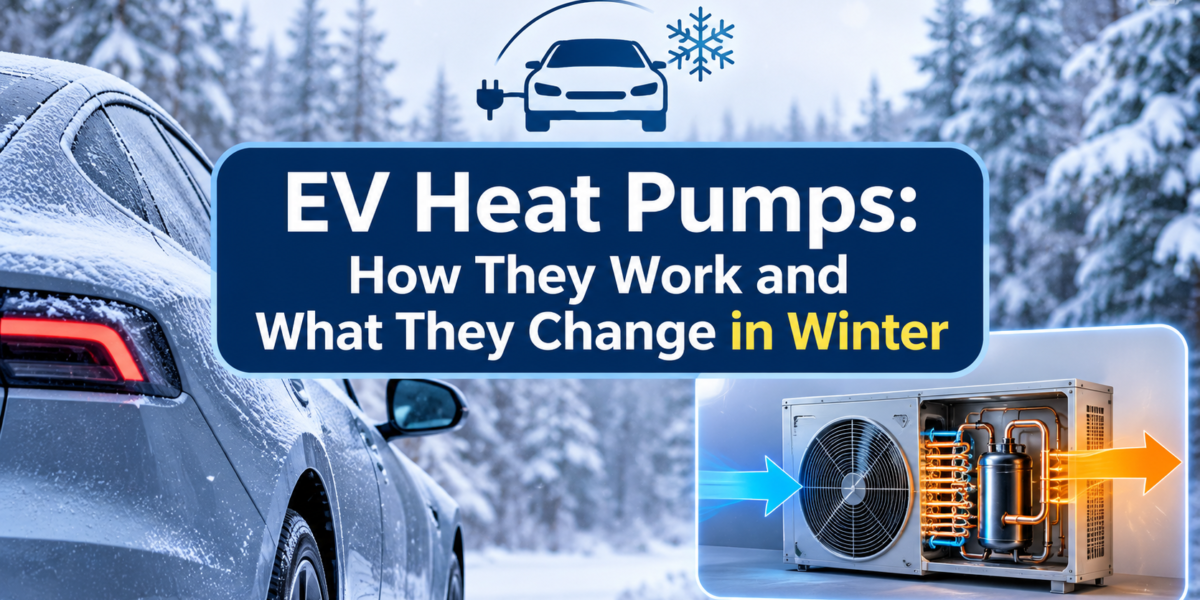
Heat is one of the biggest energy costs in a cold-climate EV, and the cabin heater is often the largest single draw on the battery in winter. That is why heat pumps have become a common feature on newer electric cars. A heat pump changes how the car warms its cabin, and the difference can matter on a cold morning or a long winter trip. This guide explains how the system works, which kinds of cars tend to have one, and what to look for when you compare models.
We keep the range-loss numbers out of this article on purpose. Our separate article on cold-weather range loss covers those figures, so here we focus on the mechanism and the practical differences.
How a conventional heater works
A traditional EV cabin heater works like a space heater. It uses electrical resistance to turn electricity directly into heat. That is simple and reliable, but it is not efficient, because every unit of electricity produces roughly one unit of heat. On a very cold day, a resistance heater can draw a significant share of the battery’s energy.
How a heat pump works
A heat pump does something different. It moves heat from one place to another instead of creating it. In winter, it can pull heat from the outside air, from the drivetrain, or from the battery, and move that heat into the cabin. Because it moves heat rather than generating it, a heat pump can deliver more heat per unit of electricity than a resistance heater, as long as the outside temperature is not too low.
The key limit is temperature. Heat pumps work well in mild cold but lose efficiency as the air gets very cold, and many systems add a resistance heater as a backup for those conditions. The better designs switch between modes automatically, so the driver does not have to think about it.
Why this matters for winter driving
The practical benefit is less energy spent on heating, which leaves more energy for driving. The benefit is largest in mild winter conditions, where the heat pump can do most of the work. In very cold weather, the advantage shrinks, and the car may rely on its backup heater.
A heat pump also changes how heat-related features work. Preconditioning, defrosting, and seat heating each draw energy differently, and the heat pump affects that balance. Ask how your car manages these functions before you rely on them in a long trip.
Step 1: Check whether your car has one
Start with the specification sheet. Many manufacturers list the heat pump as a feature, sometimes as an option or as part of a cold-weather package. Do not assume it is standard because a newer model has it, since trim levels and regional markets can differ.
Step 2: Understand the backup system
Ask how the car switches between modes. Some systems use the heat pump alone until the temperature drops below a set point, then add resistance heat. Others use both at once in certain conditions. A clear explanation in the owner manual tells you what to expect on a very cold morning.
Step 3: Look for real-world owner reports
Specifications do not show how a heat pump performs in your climate. Owner threads from cold regions often describe how the system behaves in practice, including how quickly the cabin warms up and how the car handles defrosting. Read several threads before you decide, and check the date and location of each post.
Our sources on heat pumps are still thin. Before this article goes live, add an owner thread or a manufacturer page that explains the heat pump behavior in cold weather, and link it directly in the text.
Step 4: Compare cars on the same basis
When you compare two EVs, check whether both have heat pumps, and if they do, compare the operating temperature range and the backup system. A car with a heat pump that works well down to a lower temperature may be more useful in a cold region than one with a heat pump that struggles earlier.
Step 5: Use the system well
A heat pump works best when you preheat the car while it is still plugged in, use seat heaters when you only need warmth in your seat, and keep the cabin at a moderate setting. Those habits reduce the energy the system needs, and they make the heat pump more effective. Keeping the car’s software up to date can also improve how the system manages heat.
What to remember
A heat pump does not make an EV immune to cold. It changes how the car makes heat, and that change can help a lot in mild winter conditions. Check the specs, read the backup behavior, and look at owner reports from your own climate before you decide that a heat pump is the feature you need.
Research note from the EVsFuture team: This article explains how heat pumps work and what to check when you compare cars. Heat pump performance varies by temperature, model, and software version. The Recurrent heat pump page and at least one owner thread from a cold region still need to be added before publishing.