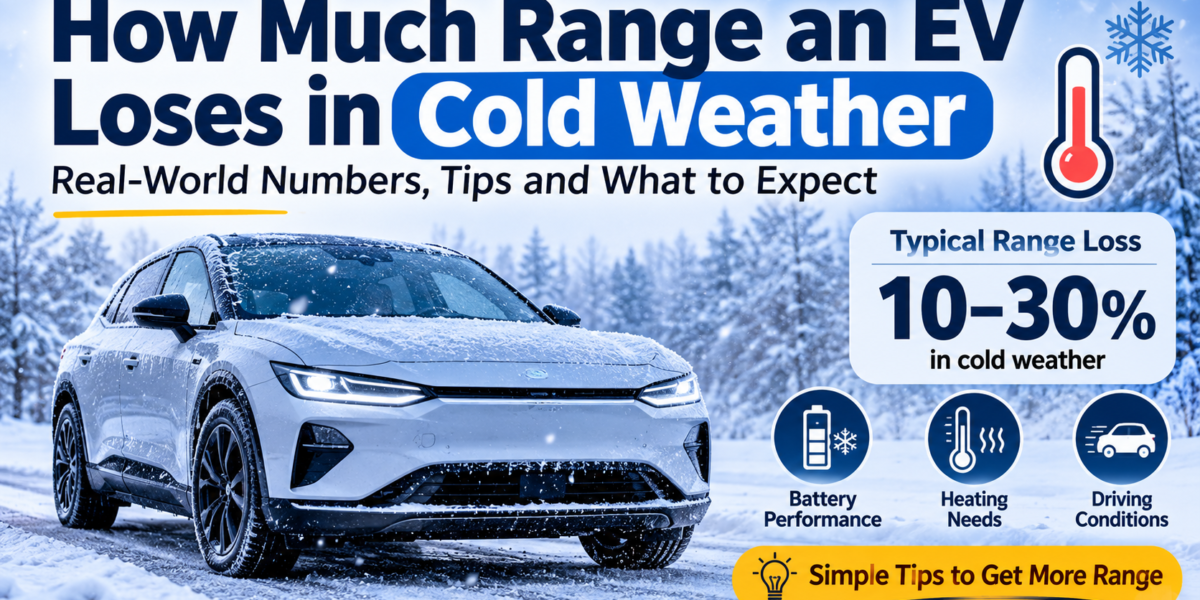
Cold weather is the most common complaint EV owners make in winter, and it causes real frustration. A car that showed 250 miles of range in the summer may show far less on a freezing morning. The good news is that most of this loss is temporary, and the amount depends a lot on how and where you drive.
This article explains why the loss happens, how much it varies between models, and what you can do to reduce it. Fleet data from Recurrent gives a useful look at how different models perform in winter, and it is the basis for much of what follows.
Why cold cuts range
Batteries work less efficiently in low temperatures. The chemistry moves more slowly, and the battery can deliver less power and accept less charge. The car also uses energy to warm the battery and the cabin, and that energy comes from the same pack that drives the wheels. Heating the cabin is often the largest single draw in winter.
None of this means the battery is damaged. When the pack warms up, most of the lost range returns. That is why the same car can show a very different range after a few miles of driving on a cold morning.
Why short trips hurt the most
Short trips suffer the most in winter for a simple reason. The battery and cabin never fully warm up before you reach your destination, and the car spends more of its energy on heating during the first few miles. A ten-minute drive in the cold can use far more energy per mile than the same distance on a long highway run.
If you can, group errands into a single trip, and precondition the car while it is still plugged in. Preconditioning uses grid power rather than battery power, so you start the drive with a warmer pack and a cabin that is already comfortable.
What the fleet data shows
Recurrent’s research on winter range loss compares how different models hold up in cold conditions. Its findings show that the drop is not identical across cars, and that the results depend on design, battery size, and the heat system. The Recurrent research page on winter EV range loss is worth reading in full for the model-by-model detail.
A second source, Automotive Fleet’s coverage of which EVs perform best in winter, looks at the same kind of data from a fleet angle. Reading both helps you avoid relying on a single test. When two sources agree on a model, you can have more confidence in the result. When they disagree, check the methods.
Practical steps that help
Several habits reduce the loss without much effort. Preconditioning while plugged in is the most effective. Seat heaters and steering wheel heaters use far less energy than cabin heat, so use them first. Keep tires at the correct pressure, since cold air lowers pressure and increases rolling resistance. Drive at moderate speeds, because highway speeds in the cold consume energy quickly.
Plan for the worst case on long trips. Check the forecast, leave with a margin, and know where the chargers are along the route. A driver who plans for a 20 percent cushion has far fewer surprises than one who relies on the number on the dashboard.
Reading the range estimate
The range number on your dashboard is an estimate based on recent driving. It can jump after a single cold start, and it can drop after a long idle. Do not judge the car by the first reading of the day. Watch the number over several trips and pay more attention to the trend than to any single figure.
Research note from the EVsFuture team: Winter range results depend on temperature, trip length, and the way the car is driven. The Recurrent and Automotive Fleet sources above give useful model-level data, but check the methods and the test conditions before you compare cars directly.